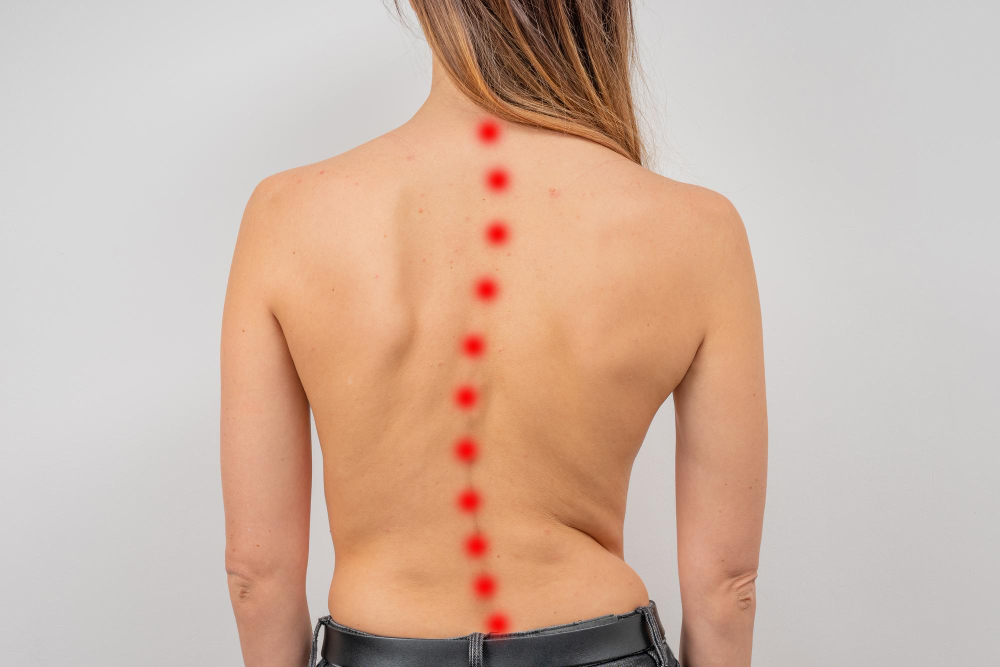
Scoliosis Management & Pain Relief in Houston, TX
Scoliosis — an abnormal lateral (side-to-side) curvature of the spine — affects millions of Americans, and many adults in Houston live with its ongoing effects: chronic back pain, muscular imbalances, reduced mobility, and accelerated joint wear. At Optimal Spine and Sports Medicine, Dr. Kenneth Haywood provides a specialized, non-invasive approach to managing scoliosis that focuses not just on the curve itself, but on optimizing the function of the entire body and improving quality of life.
Book OnlineUnderstanding Scoliosis: Beyond the Curve
A healthy spine, when viewed from the back, should run in a relatively straight vertical line. In a patient with scoliosis, the spine instead takes on an “S” or “C” shape — and importantly, the vertebrae also rotate as they curve, creating a three-dimensional deformity. This curvature causes the body to compensate in ways that produce a cascade of secondary problems:
- Uneven Shoulders and Hips: One side of the body bears more of the structural load, leading to chronic muscle fatigue, asymmetrical wear on joints, and visible postural changes.
- Rib Humping: The rotation of the thoracic vertebrae can shift the rib cage, sometimes affecting the mechanics of breathing and causing mid-back discomfort.
- Accelerated Joint Degeneration: Because the body’s weight is distributed unevenly, certain spinal segments, discs, and joints wear down faster — contributing to early-onset arthritis and chronic pain.
- Muscle Imbalance: The muscles on the convex (outer) side of the curve tend to become elongated and weakened, while those on the concave (inner) side become shortened and hypertonic.
How Chiropractic Care Helps Scoliosis
While chiropractic care cannot structurally “straighten” an established scoliotic curve, it is an essential tool for managing the condition and maintaining a high quality of life. Dr. Haywood’s approach to scoliosis at Optimal Spine and Sports Medicine focuses on:
- Reducing Pain and Muscle Tension: Targeted adjustments and soft-tissue therapy address the musculoskeletal pain and chronic muscle tension caused by the asymmetrical loading of the spine.
- Improving Spinal Mobility: Gentle mobilization of restricted spinal segments helps maintain range of motion and reduces stiffness that accumulates from years of compensatory posturing.
- Slowing Progression: Keeping the spine mobile and the surrounding muscles balanced may help slow the progression of the curve, particularly in growing adolescents and in adults experiencing increased curvature over time.
- Correcting Secondary Compensations: Adjustments to the pelvis, hips, and thoracic spine address the downstream effects of the scoliotic curve on the rest of the body.
Therapeutic Exercises for Scoliosis
Exercise is a critical component of scoliosis management. Dr. Haywood integrates therapeutic exercises into every scoliosis care plan — targeting the specific muscle imbalances created by your curve pattern to build a more balanced, supportive musculature around the spine. Strengthening the core and paraspinal muscles helps the spine resist the forces that encourage curve progression.
Scoliosis Management at Every Age
Whether your scoliosis was diagnosed in childhood, adolescence, or adulthood, the right care can make a meaningful difference in how you feel and function. Adolescent scoliosis benefits most from early, proactive management — when the potential to slow progression is greatest. Adult scoliosis care focuses primarily on pain reduction, mobility preservation, and quality of life. See our pediatric chiropractic page for more information about scoliosis monitoring in younger patients.
Call Optimal Spine and Sports Medicine at (281) 301-7710 to schedule your scoliosis evaluation with Dr. Haywood in Houston, TX.
Frequently Asked Questions About Scoliosis
Can chiropractic care correct scoliosis?
Chiropractic care cannot structurally reverse an established scoliotic curve. However, it is highly effective for managing the pain, stiffness, and functional limitations caused by scoliosis, and may help slow the progression of the curve when combined with therapeutic exercises and regular monitoring.
At what age is scoliosis typically diagnosed?
Scoliosis is most commonly diagnosed during adolescence — often detected through school screening programs or during a growth spurt between ages 10 and 15. However, it can also develop in adults due to degenerative changes in the spine (“de novo” scoliosis) or as a continuation of undiagnosed childhood scoliosis.
Does scoliosis always cause pain?
Not necessarily. Many people with mild to moderate scoliosis experience no pain at all, particularly when young. However, as the spine ages and degenerative changes accumulate, pain and stiffness become increasingly common — especially in curves that have been left unmanaged. Adults with scoliosis are more likely to experience chronic back pain than those with a normal spinal alignment.
Is scoliosis hereditary?
Idiopathic scoliosis — the most common form — does appear to have a genetic component. If a parent or sibling has scoliosis, there is an elevated risk that other family members may develop it as well. Regular spinal evaluations for children in families with a history of scoliosis are strongly recommended.
What is the difference between functional scoliosis and structural scoliosis?
Structural scoliosis involves a true, fixed curvature of the spine that is present regardless of body position. Functional scoliosis is caused by a secondary factor — such as a leg length discrepancy or muscle spasm — that creates an apparent curve that disappears when the underlying cause is corrected. Both types are evaluated during Dr. Haywood’s comprehensive spinal assessment.
How often should someone with scoliosis see a chiropractor?
The frequency depends on the severity of the curve, the presence and intensity of symptoms, and whether the patient is in a period of active growth. Actively growing adolescents and adults experiencing pain or increased curvature may benefit from more frequent care, while stable adult scoliosis patients often do well with monthly wellness visits to maintain mobility and manage symptoms.
Can therapeutic exercises really help with scoliosis?
Yes. Scoliosis-specific exercises — such as those based on the Schroth method — have been shown to improve posture, reduce pain, and in some cases slow curve progression. Dr. Haywood designs individualized exercise programs targeting the specific muscle imbalances created by your curve pattern for the most effective results.